
Understanding glass
Transparency is more than transmitted light
Background, light angle, thickness and edge colour determine whether a glass plane appears quiet, bright or substantial. The choice belongs in the context of the product’s use.
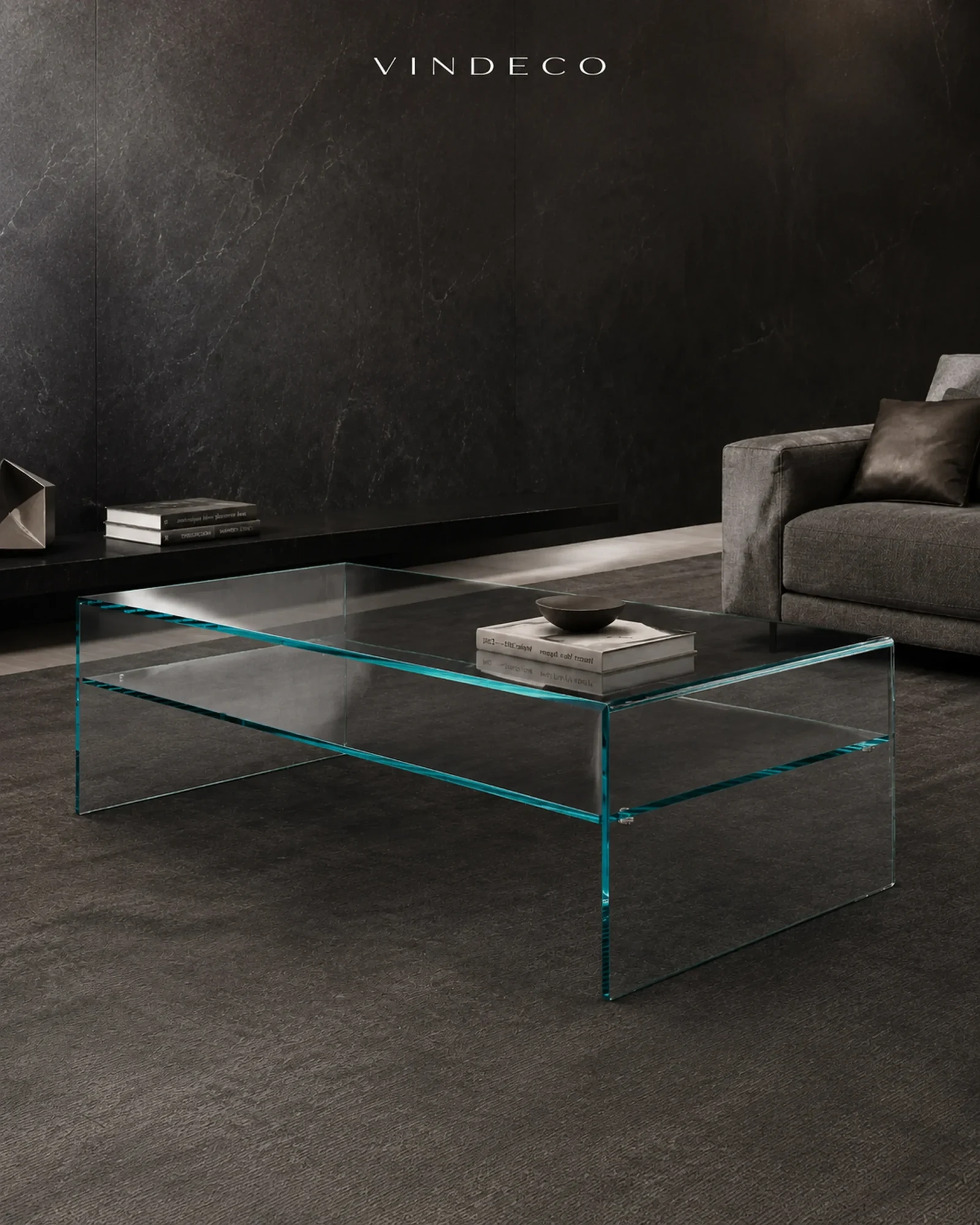
When we see a glass object in a room, our eye often follows the room reflected in it before reading the object itself. The wall colour, window light and whatever sits behind the plane all influence our impression of transparency. A product photograph is valuable, but it records only one of many possible settings.
Reading glass means asking a few simple questions together. What does the edge reveal about thickness and finish? How does the surface behave in daylight and artificial light? How is the plane joined to its support? These questions help us choose a piece that will feel as considered in our own room as it does in the photograph.
Edge and thickness
The edge reveals thickness and the finish of a plane. Check the individual product specification when comparing thickness options.
Surface and finish
Clear, smoked and reflective surfaces behave differently across settings. Light and use need to be considered together.
Connection and balance
A joint explains the relationship between plane and support. Alignment and interval are part of the object’s architectural presence.
See transparency against the real background
Clear glass beside a pale wall can nearly disappear. The same plane against a dark surface may have a much more visible edge and reflection. Before choosing, think about what will stand behind the object: a rug, a wall, books or the path of window light. A glass colour name alone cannot tell you how light a piece will feel in your room.
Compare the product from several angles and, where possible, view a sample in daylight and artificial light. The aim is not to remove reflections; they are part of the material’s character. The aim is to understand the part they will play in your own space.
Move from image to specification
A good photograph makes a form legible, but it cannot fully identify the piece’s construction. Alongside it, read the glass type, thickness, edge treatment, dimensions and connection positions. These details explain how the visual lightness has been achieved and what use the model is intended for.
If you are choosing between two products, compare them against the same needs. For a side table, consider height, useful surface, distance from the sofa and access to the edge. Visual differences become meaningful when they answer a real use.
Questions for a more confident choice
Before ordering, record three things: where the object will stand, how it will be used and which details matter most to you. The answer may concern transparency, edge colour, a discreet joint or ease of care. With that context, a discussion about available options becomes much more precise.
For a custom product, prepare dimensions and an image of the intended space. Feasibility needs to be assessed for that actual setting. An inspiring photograph is useful, but it does not replace the final drawing and specification.
Knowledge should return to a product decision
Begin with the product or spatial application to review the relevant glass choice.
Explore products