
Form and space
What changes when glass curves?
A curve is more than decoration: it changes light, clearance, tooling and the way the panel connects.
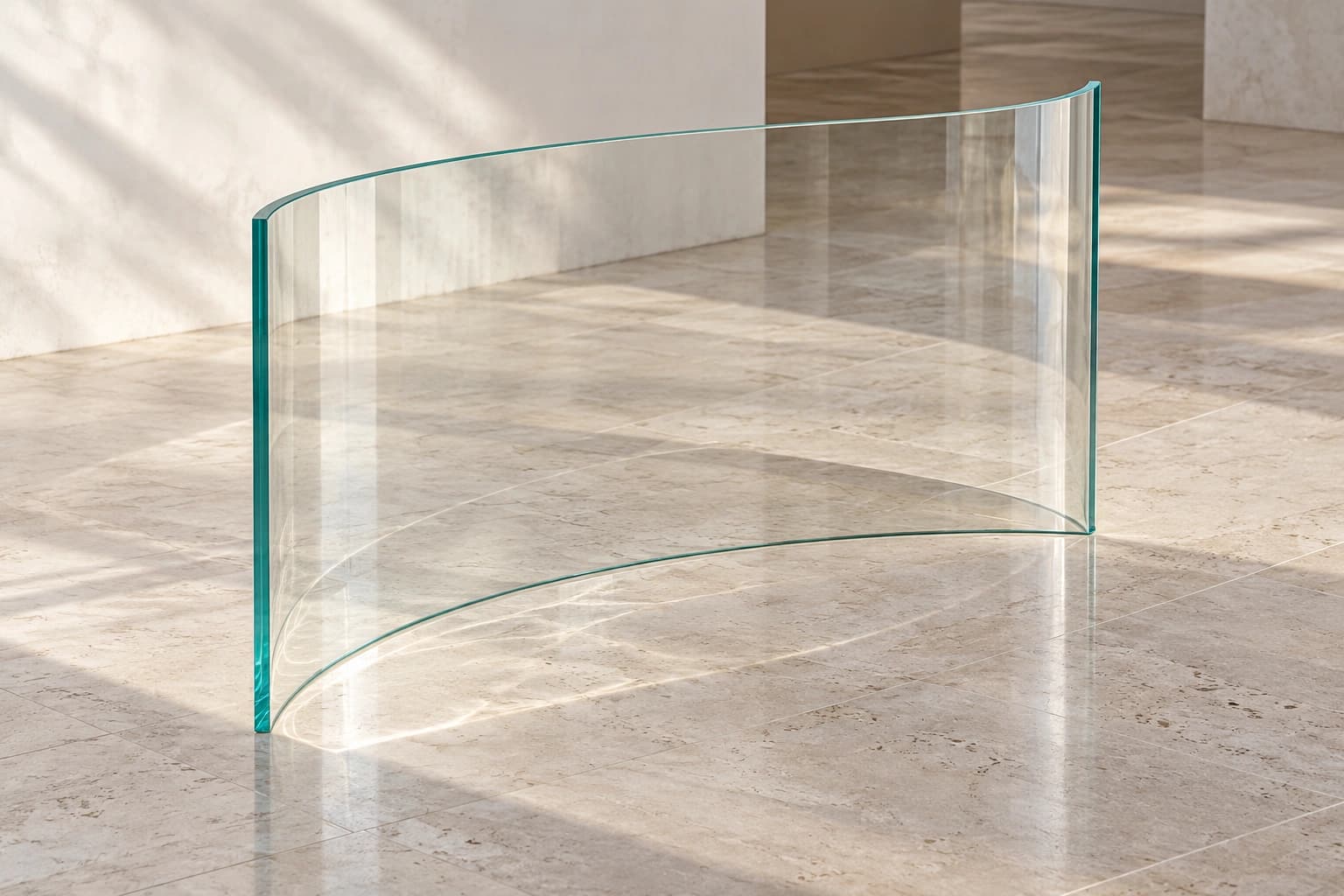
A flat plane usually reflects light along a relatively predictable path. When the material curves, a line of light moves across it and its boundary changes from a straight line to a softer presence. That can be compelling for a table or a spatial divider, but it also introduces new questions.
Consider how much room the curve occupies, from which side it will be seen most often and how the support follows it. A convincing render cannot by itself turn every imagined arc into a manufacturable piece. For a custom order, the form becomes assessable when dimensions, the path of the curve and the connection method are recorded in a drawing.
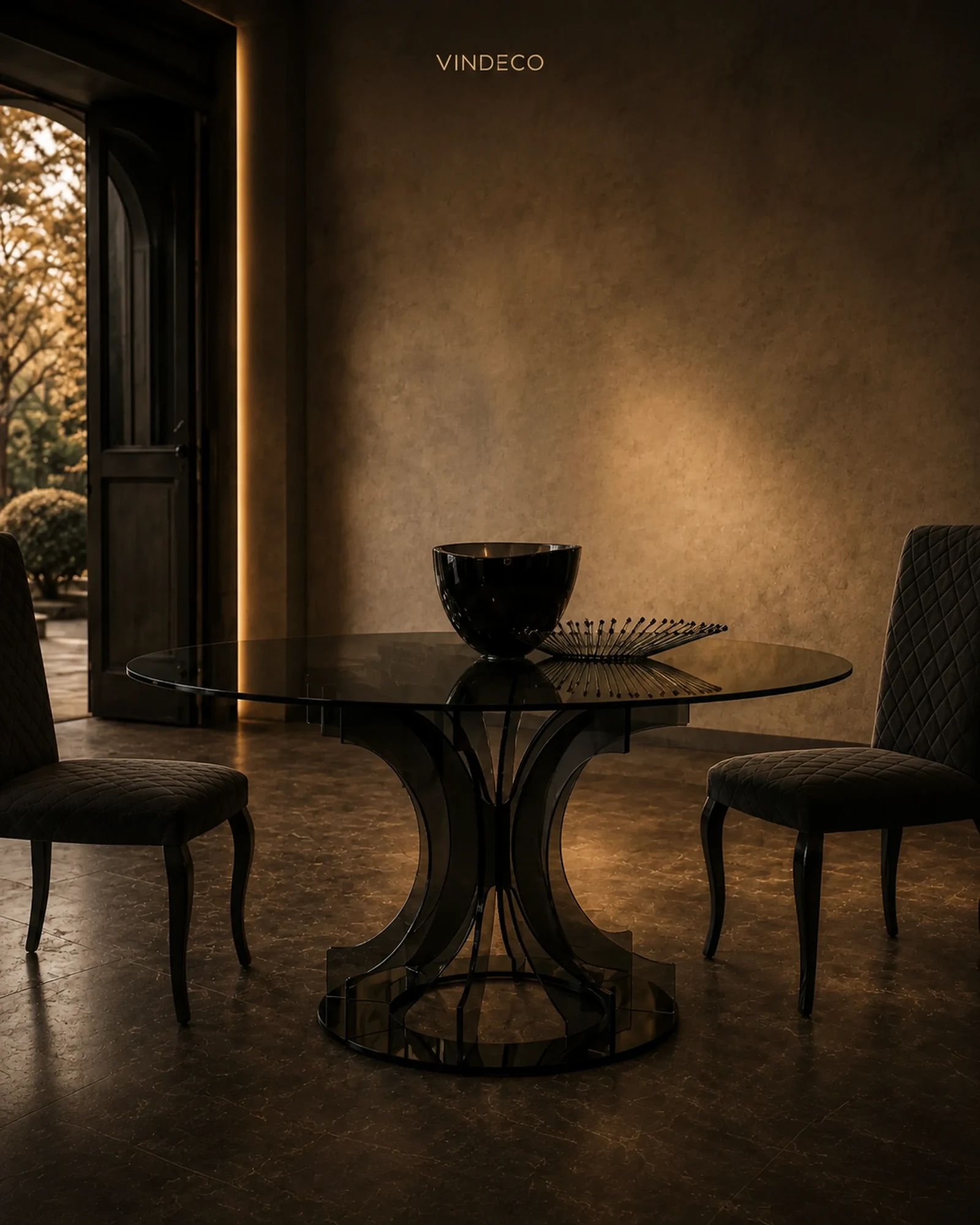
A curve in a room
A curved surface moves reflections along the piece and gives glass a different presence from a flat plane. Clearances and circulation around furniture matter as much as the silhouette.
Can the form be made?
Radius, thickness, size and type of bend depend on the process and tooling. A render alone cannot establish feasibility; a custom proposal needs a drawing and, where appropriate, a sample review.
Let connections follow the form
Supports and joints should remain legible and balanced with the curve. Designing them alongside the overall shape avoids awkward additions later.
Read a curve from several angles
Curved glass looks different from the front, the side and along a route through the room. One angle may emphasise transparency; from another, reflected light can make its outline more pronounced. A single fixed view is therefore not enough when choosing furniture. Consider the routes from which the object will normally be seen.
The curve can also change the clearance between the piece and a wall or neighbouring object. Mark its actual position and dimensions before ordering so that a form that looks light in an image does not feel intrusive in the room.
From idea to feasibility
During concept work, a curve can be drawn freely. During making, it becomes a question of dimensions, radius, thickness, glass type and tooling. The distinction matters: approval of the beauty of a render does not amount to approval of its manufacturability.
For a custom proposal, a dimensioned curve and defined connection method provide a starting point for technical review. If a manufacturing constraint arises, the form should be adjusted while preserving the design intent, rather than forcing a change onto the piece at the end.
Use and care details
A curved surface can have areas that are less accessible to clean than a flat plane. Consider the base, the distance to the wall and whether the object may need to be moved. The elegance of a curve lasts in daily use when access and care have been considered from the beginning.
The same applies to a curved edge. Finish and connection should follow the line consistently so that the form remains legible. A sample or more precise model can make these details clear before final approval.