
Form and space
Joining glass to wood and metal
A connection reconciles load, movement and appearance. No single detail suits every glass furniture piece.
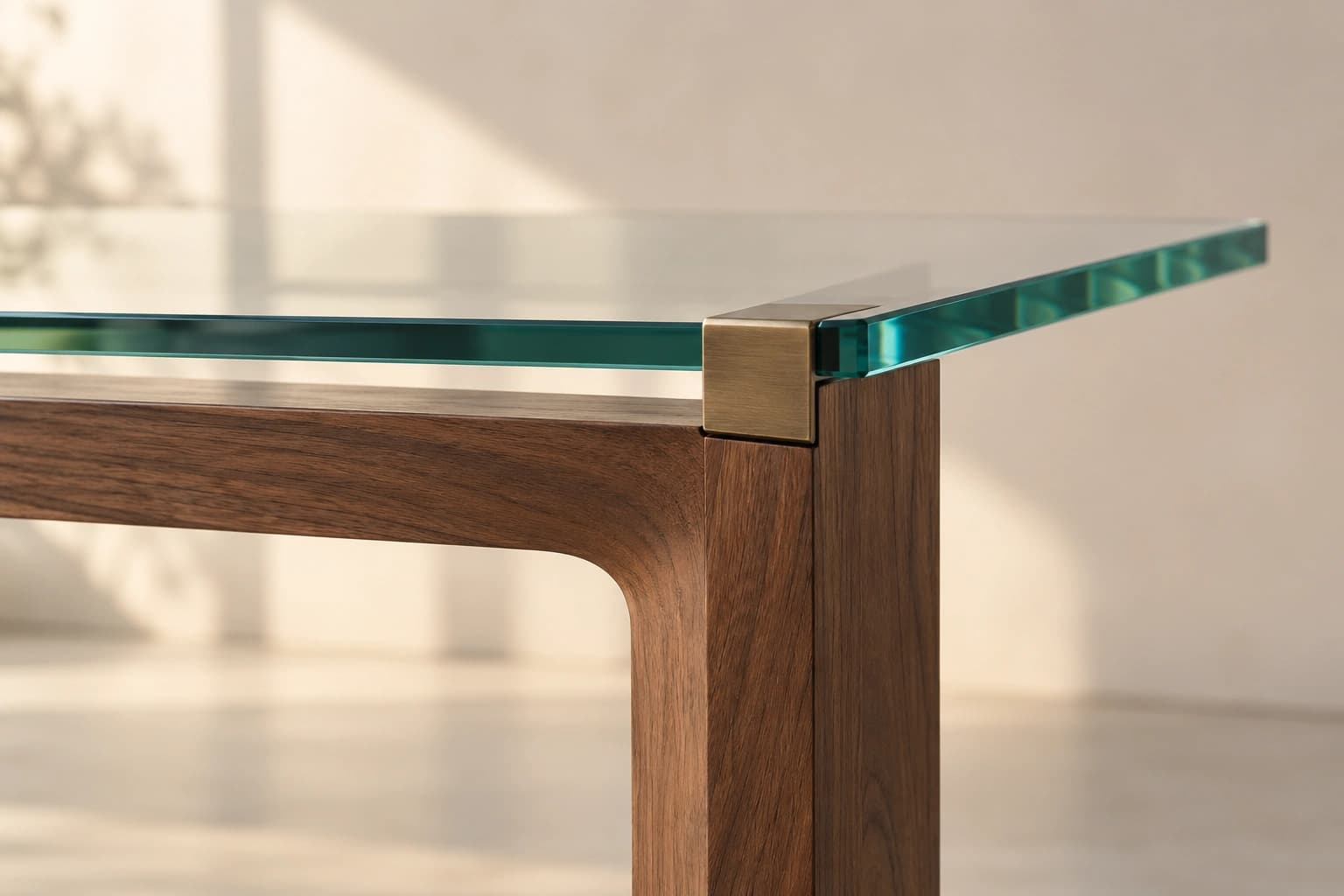
In glass-centred furniture, wood and metal often play supporting roles: they add warmth, strength or a precise line to the transparency of glass. The meeting point of these materials may be the smallest part of a product photograph, yet it is one of the most consequential decisions. If the joint is unresolved, even a beautiful material combination may feel unconvincing in daily use.
A good connection does not always have to disappear. Sometimes visible hardware brings order to the object; sometimes a quiet detail lets the glass plane take the lead. The choice depends on form, load, environment and access for maintenance. In a custom design, contact points and the assembly method are best considered from the first drawing.
What a joint has to do
A glass plane needs a clear relationship with its support or complementary material. Contact, spacing and maintainability are design decisions; a delicate appearance must not obscure the load path.
Adhesive or mechanical fixing?
Adhesives and mechanical hardware each have their own conditions of use. Material, environment, dimensions and load determine the choice, which needs evaluation for the actual design.
Good details begin early
When joint positions, material movement and assembly access are resolved in the drawing, the object can look calmer and more precise. A custom proposal needs this review before final approval.
Follow the load path
To understand a joint, start at the surface that receives weight and follow it through the support to the floor. How is the glass held, and where does the complementary material enter the path? If the product photograph cannot answer, the specification or drawing should. A calm appearance comes from resolving these structural questions carefully.
Changing the dimensions of a plane or the position of a base can alter that path. A successful joint should not be transferred to every size without review. Each proposal needs evaluation for its own shape and intended load.
Movement and material care
Glass, wood and metal do not behave identically. Environment, everyday contact and cleaning all affect the meeting point. Details should allow the piece to be maintained in normal use and, where needed, provide access to hardware or complementary parts.
Ask how to care for every material in the object, not just its glass. A cleaner suitable for a glass surface may be unsuitable for a wood or metal finish. Care guidance should describe the actual product and its materials.
Questions before approval
Ask what load the joint carries, whether its hardware remains visible, what space is allowed between materials and how the object is assembled. If it will be moved or placed in unusual conditions, share that information before signing off.
A useful answer is not a generic detail for every table. The drawing and specification should show why a connection suits this object, these dimensions and this use. Then even a small joint can complete the quiet precision of the piece.