
Making
How to read a glass edge
At the edge, thickness, light and finish meet. Learn what a polished, ground or bevelled edge communicates.
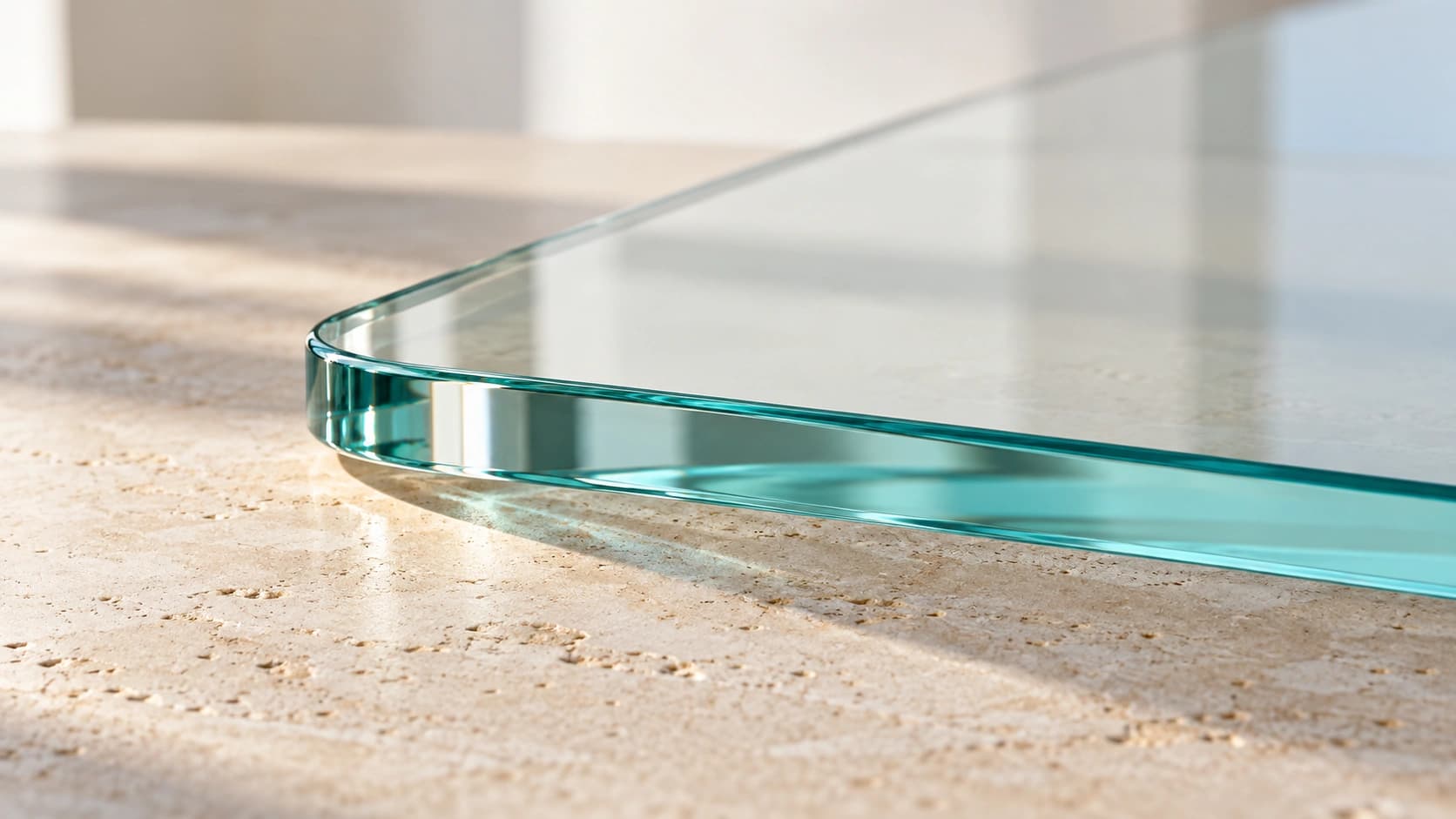
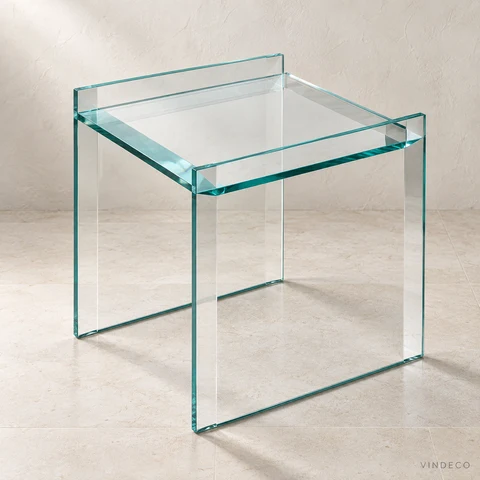
From a distance, a glass plane can appear almost weightless. Its edge reveals its real presence. As the eye moves from the face to the side, thickness, colour and the way the material has been finished become visible together. On an open table top, that line may be the most distinctive detail of the object.
An edge is both seen and touched. A corner along a circulation path calls for different consideration from an edge concealed behind a structure. Look at a sample from the angles in which you will normally use the piece, then read the specification for that model. A close photograph helps, but the finished quality also depends on consistency across the sides and suitability for the intended use.
More than the end of a plane
An exposed edge defines the boundary between glass and the surrounding space. Its finish affects touch, reflected light and the way thickness reads; it should be selected with the product’s form and use.
Polished, ground or bevelled
A polished edge reads clear and bright. A ground edge looks more matte, while a bevel creates a different line of light. No single finish is automatically right for every product.
Details worth inspecting
Look for a consistent edge line, no visible chips and a coordinated finish across the relevant sides. The delivered finish should match the approved specification and sample.
View the edge in different light
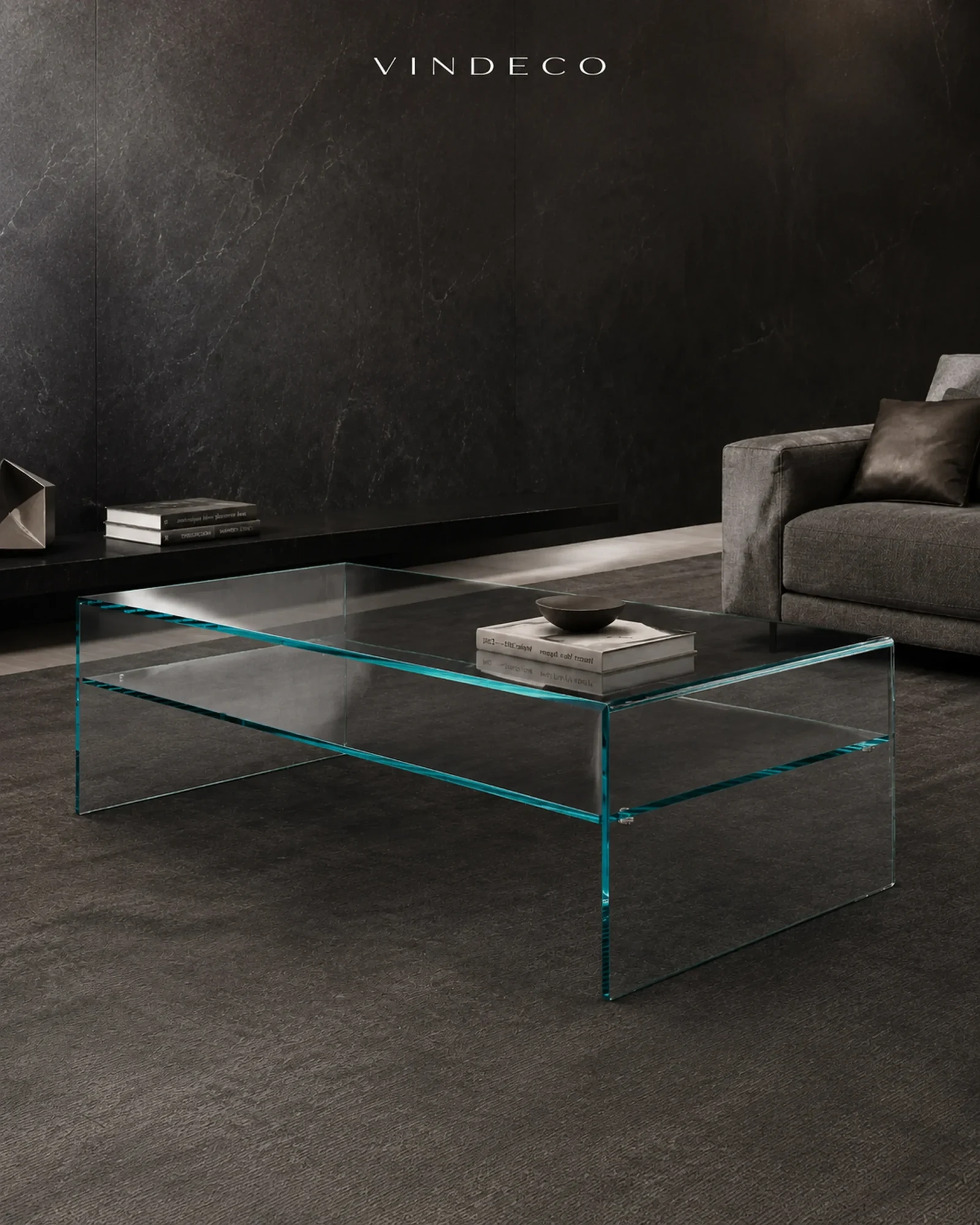
Against a light background, edge colour and thickness may appear quiet. Beside a dark surface, the same edge can draw a stronger line of light. Side lighting can also make a bevel or polish more prominent. If the edge is central to the design, view a sample against colours and light similar to the intended room.
A close photograph usually records one controlled angle. Where possible, ask to see the side and corner as well. Quality should be consistent along the entire edge, including where its direction changes.
Touch and everyday use
On a coffee table, hands and legs may frequently approach the edge. A display shelf may receive less contact, yet sit close to eye level. Those differences influence the appropriate corner form and finish. A visually delicate line still needs to suit the way a product is used.
With a sample, gently follow the accessible edge and note whether the finish feels consistent. Mention if the piece will stand in a busy route or be accessible to children, so the conditions can be considered in the review of the actual model.
A short ordering checklist
Check the finish type, corner form, which sides are visible or reachable, and whether the sample matches the written specification. On an object with several planes, different edges may play different roles. Identify the ones on view and the ones concealed by a joint.
On a custom piece, do not leave the edge until after dimensions have been agreed. The finish can affect both production details and the apparent thickness of the plane. Recording it in the drawing makes the final result more predictable.