
Materials
How laminated glass brings layers into design
An interlayer can influence both appearance and behaviour. The exact build-up of the piece matters most.
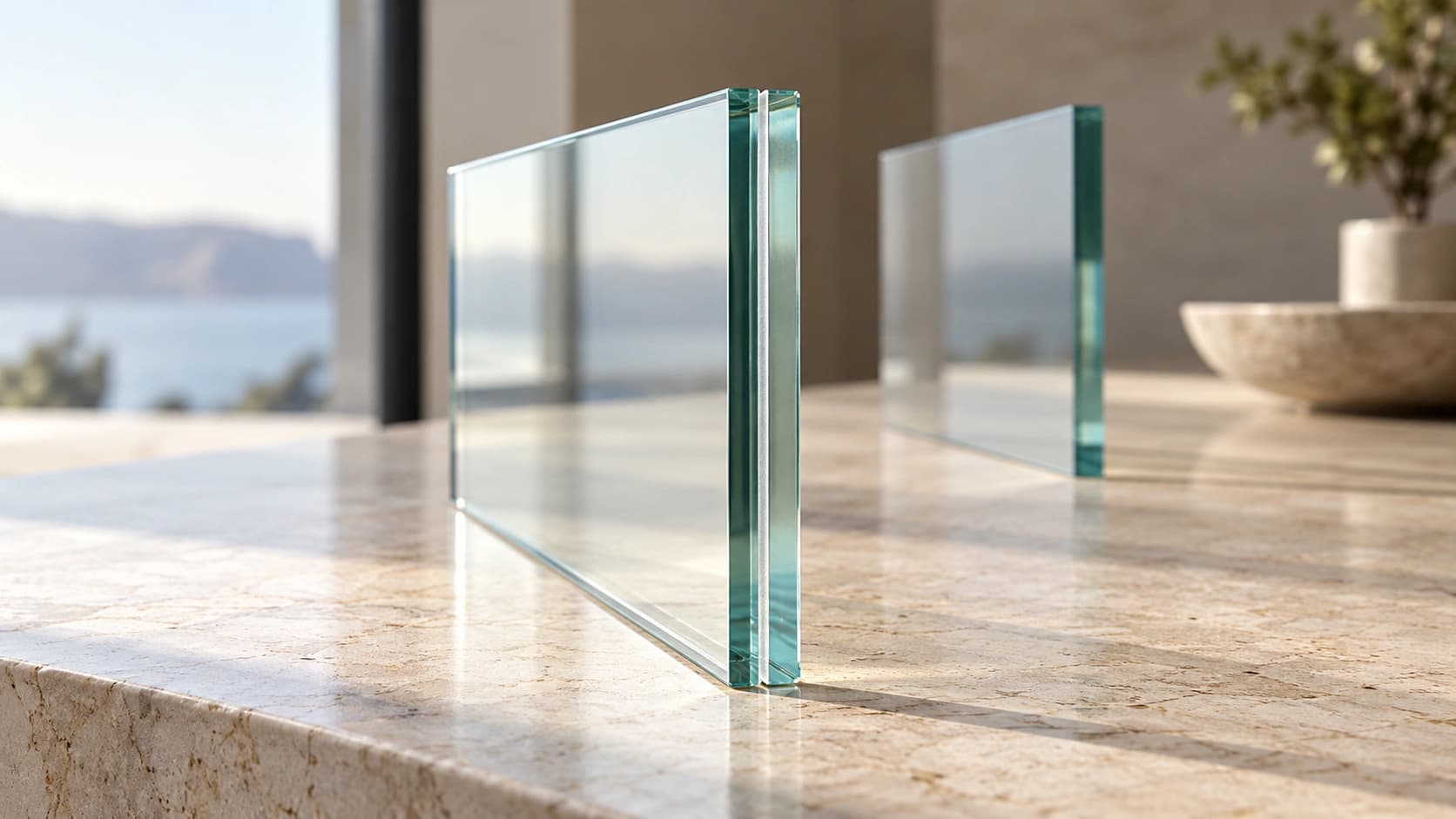
At first glance, a laminated panel may resemble any other piece of glass. Its difference lies in the layered build-up, where glass plies and an interlayer become one assembly. That structure should be described clearly for each product rather than hidden behind a broad material name.
From a design point of view, the interlayer also offers a way to shape appearance. Colour, light transmission and the legibility of the edge can change with the chosen build-up. A sample under studio lighting may still look different beside a window or in a darker room. For a custom piece, looking at a sample and recording the final build-up are complementary steps.
Read the build-up
A laminate combines glass plies and an interlayer. The number and type of layers should appear in the specification for the particular product; a thick-looking edge alone cannot describe the assembly.
The visual effect of layers
An interlayer may be clear, coloured or decorative. The result is seen in the room’s light and alongside the glass colour. A physical sample is more useful than a material name when judging appearance.
Use determines selection
A top, support or custom element does not share one universal build-up. Dimensions, supports, conditions of use and visual intent need review before a structure is chosen.
Layers from the front and side
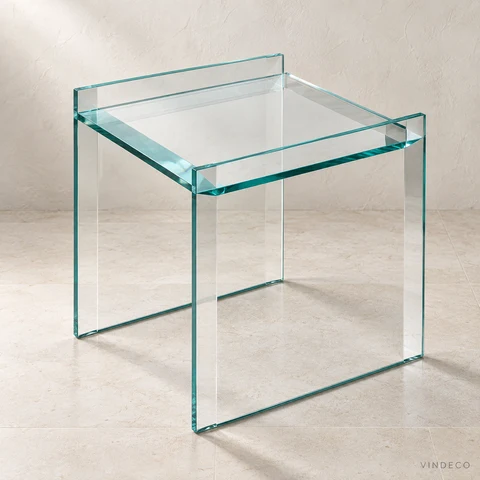
Seen from the front, the layers can nearly disappear and read as one surface. From the side, the boundary between glass and interlayer becomes easier to see. Treat that change of viewpoint as part of the design when a piece has an open edge, especially beside wood or metal with its own colour and texture.
Online images cannot reproduce edge colour perfectly; displays and studio lighting influence it. A physical sample or an approved close view can make the palette decision more accurate. For a custom piece, record the expected appearance together with the chosen build-up.
Transparency in the real room
Do not judge a laminate only against a white background. Imagine it beside the room’s wall, floor and actual lighting. An interlayer can have a different visual presence from different angles, while objects behind the glass also shape perception. Maximum transparency is not always the goal; sometimes a quieter presence belongs better in a space.
If several glass planes sit near one another, look at their colour and edge as a group. A choice that is subtle on a single panel may become much more noticeable when repeated.
What belongs in the specification?
The broad label ‘laminated’ is not enough for an informed order. Record the number and type of plies, the interlayer, dimensions, edge finish and approved use of the particular model. These details support both technical review and comparison of the delivered piece with the order.
For a custom panel, include the support and connection positions. The final build-up needs evaluation for the actual dimensions and intended load. That review should precede a firm promise of feasibility or delivery timing.