
Materials
Annealed, tempered and laminated glass: what changes?
A glass name alone is not enough. Processing and the way a panel behaves if damaged matter when choosing furniture.
Begin with the base glass
Float glass is the starting material for many pieces. The intended form and use determine whether further processing is needed. A product specification should identify the finished glass, not just its base material.
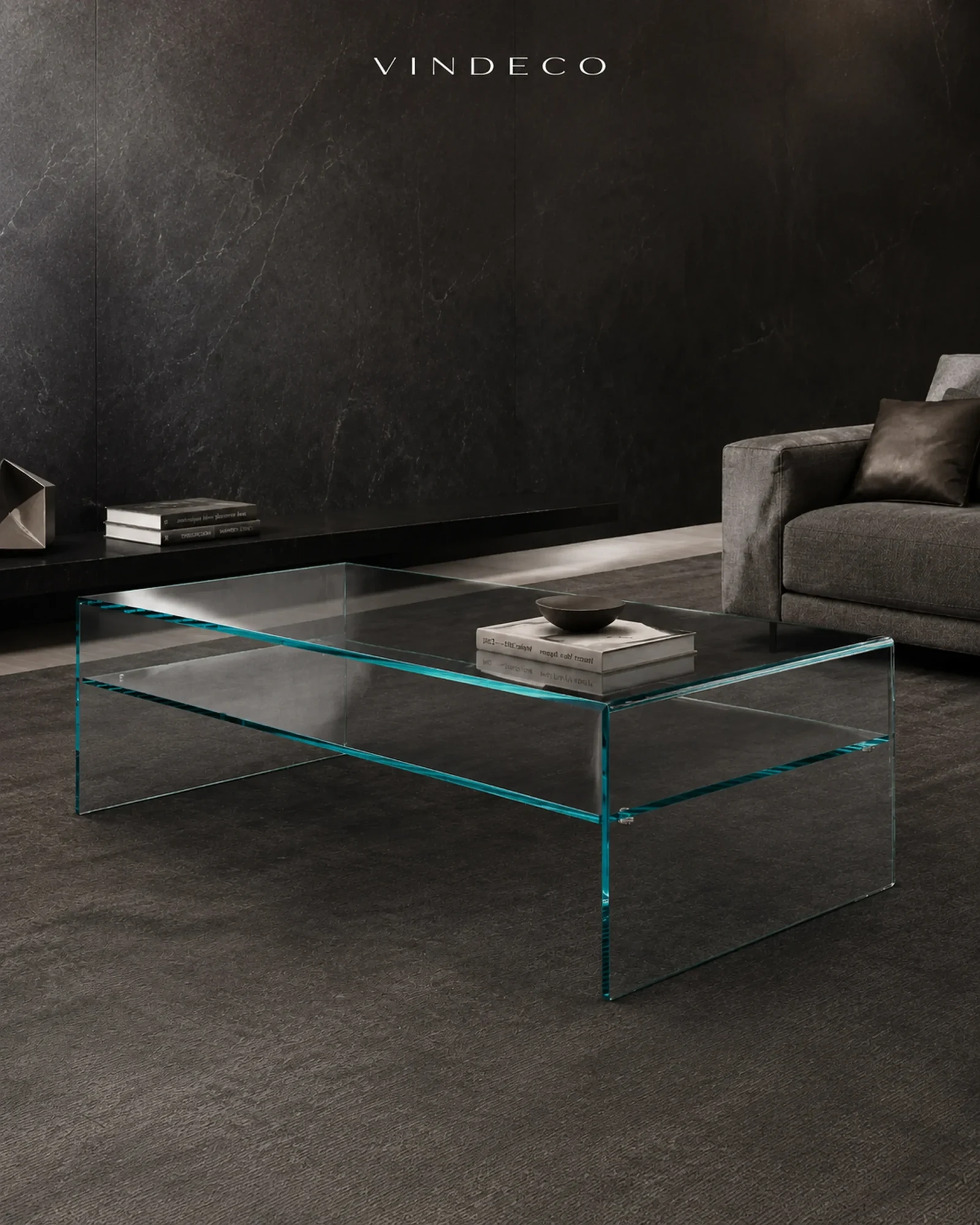
A surface that mainly covers a cabinet and a support that carries the weight of an object present different design questions. Even when two pieces look alike, the load path, location and frequency of contact can change the appropriate glass choice. Photography is a useful starting point, but it cannot replace a clear construction specification.
What tempering changes
Tempering is a thermal process that changes how glass behaves. It does not replace a review of thickness, dimensions, edge finish and location of use. Those decisions belong together for the actual piece.
The word ‘tempered’ is sometimes offered as a complete answer to a safety question. A more useful conversation starts with the object: is the surface exposed or protected, what supports it, how is the edge finished and what happens if the piece is damaged? The answers need to be considered with the real drawing and use.
Laminated means layered
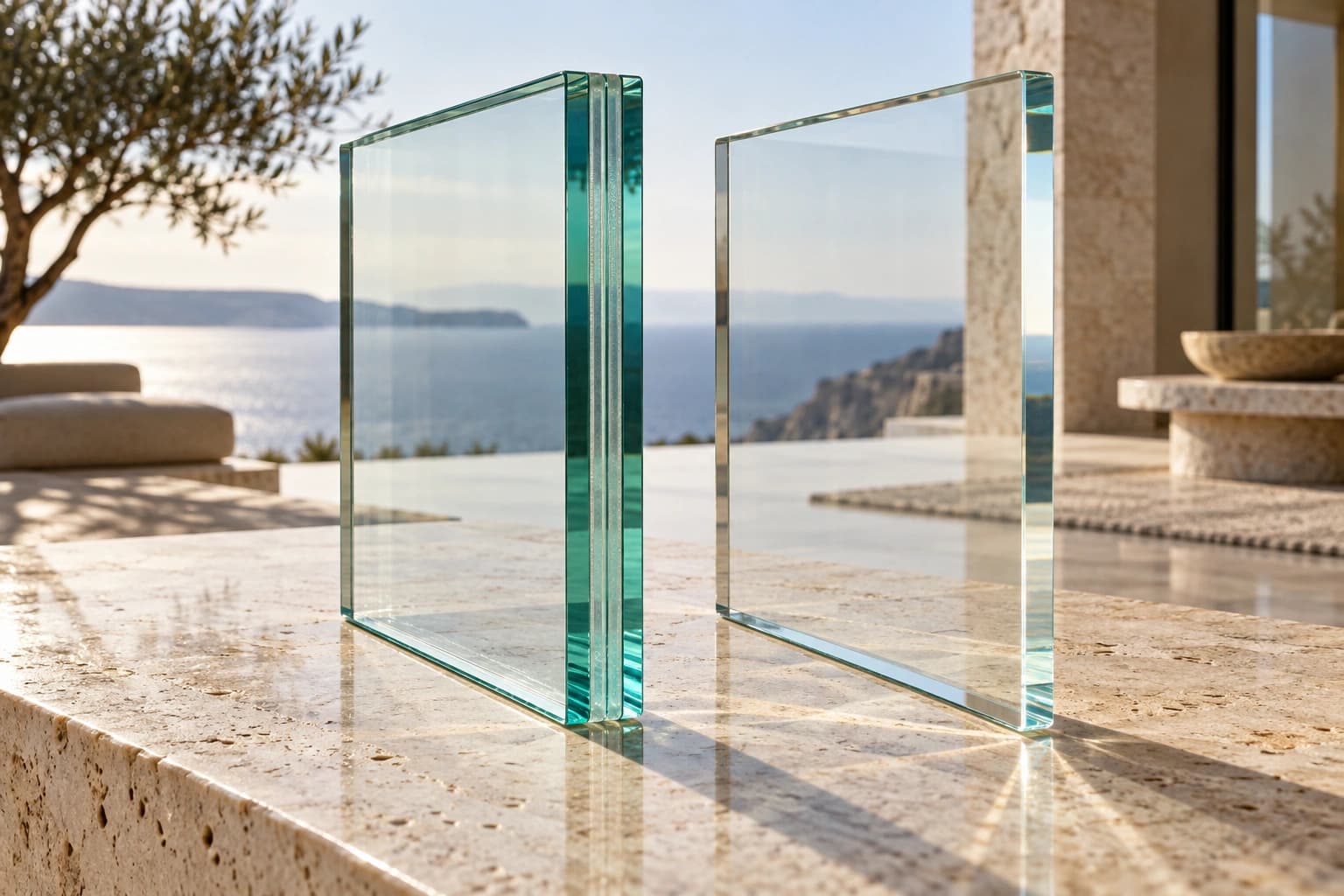
Laminated glass combines glass plies with an interlayer. The glass and interlayer both affect the assembly, so the word ‘laminated’ alone is not a complete specification.
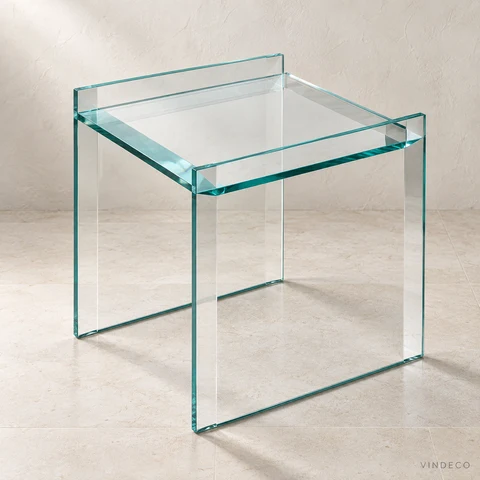
The layers affect appearance as well as behaviour. From the front, the surface may appear quiet and continuous; from the side, the layer boundary and edge colour become more legible. If the edge is part of the design, resolve that appearance with a sample or accurate detail before ordering.
What to ask before ordering
Look for the glass type, layer build-up, edge treatment and approved use in the product details or quotation. Load-bearing and custom pieces need a review of the particular design.
For a custom object, record dimensions and support positions and describe the environment in which it will be used. A considered choice begins with the material name, then tests that choice against the space, the intended use and the connection details.
How to compare two specifications
Start with the function of each part: a table top, a support, a shelf or a display door. Then compare the finished glass type, any layered build-up, thickness, edge finish and support positions. If some of these details are absent, comparing the names ‘tempered’ and ‘laminated’ alone will not tell the whole story.
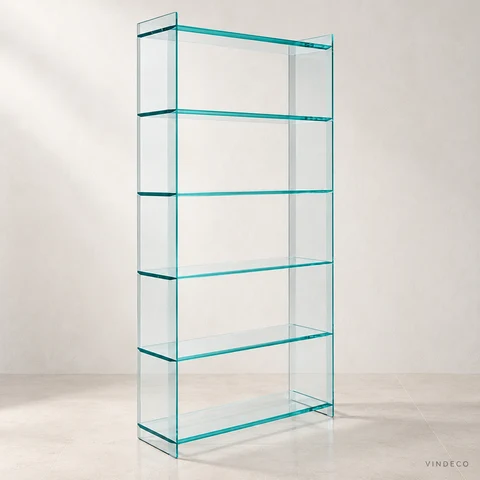
Use images for what they can show. A front view reveals proportion; a close view reveals edges and joints. For a custom order, record the agreed specification again in the quotation or approved drawing so that the conversation and the finished piece refer to the same design.
What determines the final choice?
Glass type alone does not determine product quality. The same construction may suit one form and call for review in another. Location in the home, daily contact with an edge, handling, installation and the possibility of replacing a part all belong in the decision.
If you plan to use a product differently from the listed model, say so clearly. Enlarging a top or replacing one panel is more than a visual change. The maker needs to review the revised support and connection and explain what can be built for that particular application.